Inside MesaBox
Why MesaBox, and Why Now
The contact form was built for a simpler time. Here is why home professionals need richer project intake on their own websites, and why the moment is now.
By MesaBox Team · 2026-10-02 · 6 min read
The first conversation deserves better footing
Experienced architects, builders, remodelers, and designers are good at reading a project quickly. But a short form gives them very little to read. A message arrives, someone replies, and a call gets scheduled, and only then do the location, the scope, the timing, and the budget come into view.
The first conversation is where trust is built. It works best when both sides arrive with the basics already shared, so the time goes to the project itself rather than to questions a website could have asked.
Contact forms ask the wrong questions
A generic contact form is built for every business at once, so it fits none of them well. It collects a name, an email, and an open message box, and leaves the visitor to guess what you need to know.
Visitors rarely volunteer the details that matter most. They do not know that a pool builder needs to know about yard access, or that an architect cares whether the lot is already purchased. The result is a thin message that still needs a call to decode.
Shared leads are not the answer
When website inquiries feel unreliable, many firms turn to lead marketplaces. Those leads are often sold to several companies at once, so the first job becomes racing competitors to the phone rather than understanding the project.
Meanwhile, the people already visiting your website chose you specifically. They have seen your work. Converting more of them into clear, qualified inquiries is usually a better use of effort than paying for strangers who are shopping around.
Project intake, not lead capture
Most tools for website inquiries are built to capture a contact: a name, a phone number, a line about the project. The rest is left for a call. Project intake takes in the job itself.
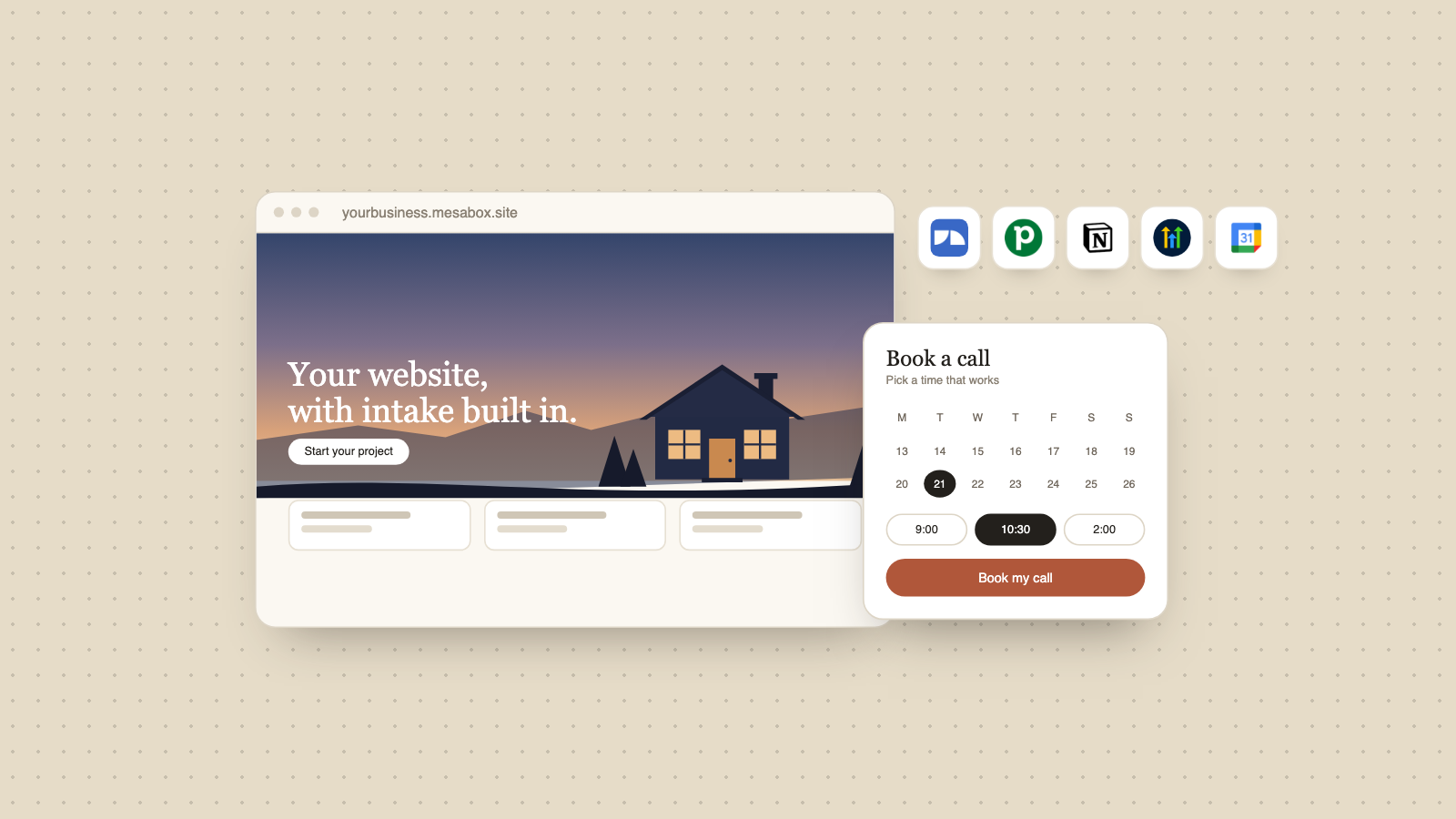
With MesaBox, a visitor describes the project in their own words, then confirms the details you care about: location, scope, timing, budget range, and anything specific to your trade. Photos and plans come along too. They see what MesaBox understood and fix anything that’s off before they send it.
Every inquiry arrives as a project brief, judged against the work you take on. When it fits, the visitor books a call in your hours right away. MesaBox never quotes prices, estimates or promises dates. Those stay with you, where they belong.
Briefs land in your Leads, your inbox and your CRM, so your whole team starts every follow-up with context.
Why now
Homeowners now expect to describe what they want in plain language and get a useful response, because that is how most of their other online tools work. A static form feels dated next to that experience.
The tools to deliver that experience no longer require a custom build or an agency. MesaBox installs on an existing website with one line of code, so a small firm can offer the same considered first impression as a much larger one. It works from your Google Maps listing too, where many homeowners find you first.
The firms that capture project details up front will spend their calls on fit, design, and trust, not on basic questions. That advantage compounds with every inquiry.
The MesaBox Blog
Useful ideas, not a crowded inbox.
Get practical articles for turning website visitors into qualified projects. Unsubscribe anytime.